What a Multichannel Outbound Strategy Actually Means
July 15, 2026
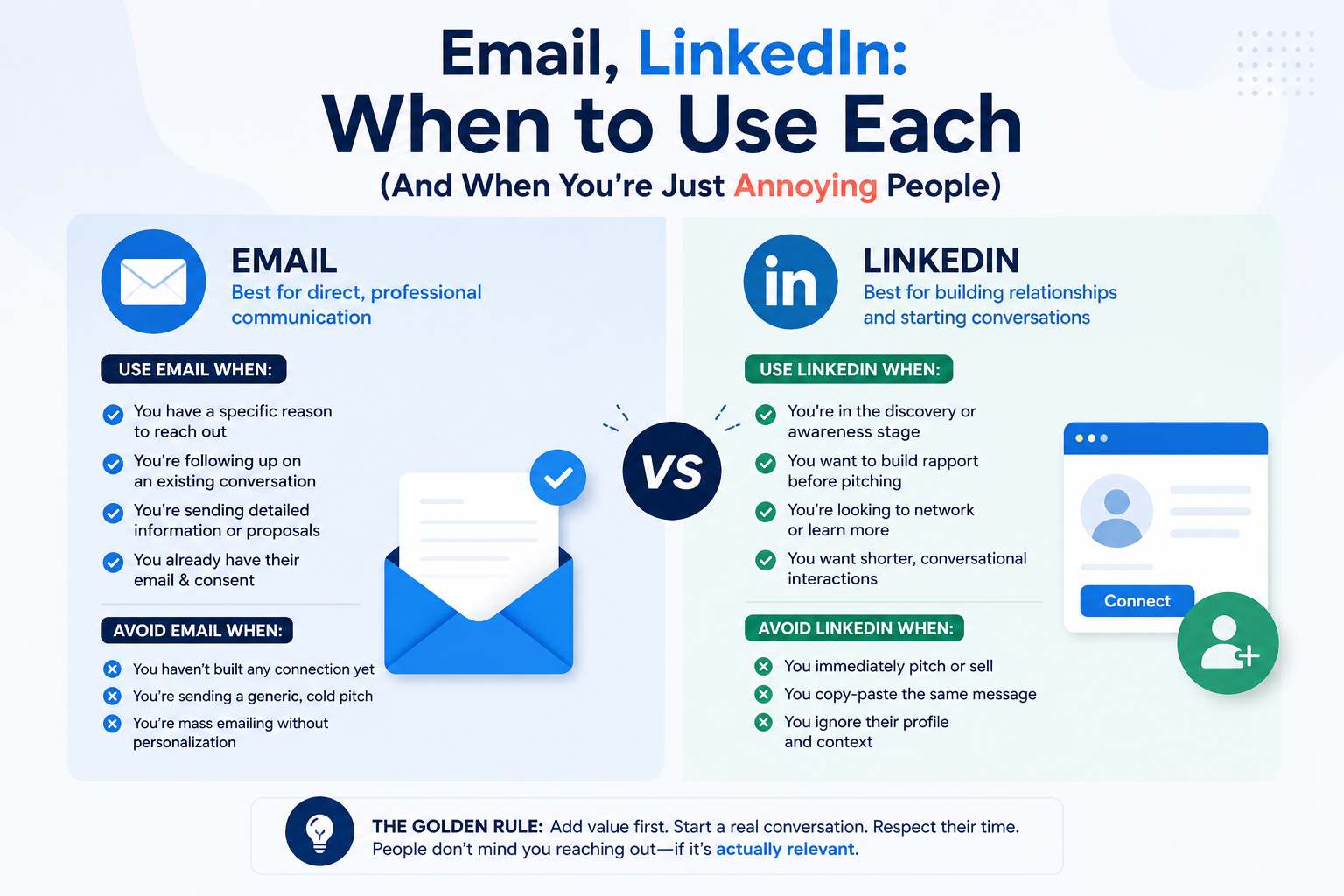
A multichannel outbound strategy isn't email, then LinkedIn, then a call, then WhatsApp, fired off in sequence because that's how the cadence tool is set up. It's a system where each channel has a job, and the job depends on what's true about the account, what just happened, and how much standing you have with that person.
The word that separates this from noise is orchestration. Orchestration is not using more channels, automating more steps, or copy-pasting the same message into four inboxes. It's being able to answer, for every single touch: why this channel, why now, why this person.
Answering that takes three things:
Context — what's actually going on with this account right now
Signal — what happened that gives you a reason to reach out today
Relationship — whether you've earned the right to use this particular channel with this particular person
Skip any of the three and the sequence starts to feel like a pressure campaign instead of a conversation.
Picking the right channel
Channel choice shouldn't come from habit, or from whatever's easiest to automate. Here's how the four main channels actually behave.
Calls
Calls convert better than any other outbound channel — that's not a hot take, it's just what the numbers say. Every serious outbound team should be calling its top accounts by default.
That said, a call doesn't need a warmed-up prospect to work. Email and LinkedIn help — they build context, which raises pickup rates and makes the conversation sharper — but they're not prerequisites. What a call actually needs is a rep who knows why they're dialing.
Reach for the phone when the account is high-value, when there's a trigger with a shelf life (funding round, a new hire, a leadership change), or when the situation is too tangled for email to sort out. Calls are also the fastest way to get a real answer: right person, right timing, real need or not.
The question worth asking isn't "is this prospect ready for a call." It's "do I actually have something worth saying." A call booked because step 3 of the sequence says "call" is an interruption. A call triggered by a real signal is a conversation.
Email
Email is where you go for clarity and scale. It gives the other person room to think, and it's the right default when there's no relationship yet and nothing urgent pushing the timeline. Use it to introduce an idea or frame a problem before anything else shows up in their inbox.
Where it falls apart: active buying situations. If the prospect is already moving, email is too slow and too easy to ignore.
LinkedIn works when there's something to point to — a post, a comment, a new hire, a role change. Without that anchor, a LinkedIn message is just your email in a different inbox, and prospects can tell.
WhatsApp and SMS
These channels land hard specifically because they feel personal — which is also exactly why they backfire when there's nothing behind them. They're fair game when there's an existing relationship, explicit opt-in, or a real deadline. A simple gut check: if a message like that showed up from a stranger, would it feel intrusive? If yes, don't send it.
The short version
No relationship, no urgency → email
Active prospect, visible signal → LinkedIn
High-value account, strong trigger → call
Existing relationship, time pressure → WhatsApp / SMS
FAQ
What is a multichannel outbound strategy?
It's using email, LinkedIn, calls, and messaging with a reason behind each one — not running every channel because you can. The channel changes based on context, what triggered the outreach, and how well you know the person.
Which outbound channel works best?
None of them, universally. Email is good for laying out a problem clearly. LinkedIn works when there's something public to point to. Calls earn their spot when there's real urgency. WhatsApp and SMS only work once there's trust and permission already in place.
Is multichannel better than just email?
Only when it's coordinated. Five channels firing without a plan will underperform two channels used well. More isn't the goal — the right channel at the right moment is.
How many channels should you actually use?
As few as the situation calls for. Pick one primary channel, and only add a second when something specific justifies it — a trigger event, a reply, a signal. Piling on channels without a reason just adds noise, not pipeline.
How do you keep multichannel outreach from turning into harassment?
Cap how often you touch someone across all channels combined, not per channel. Decide upfront what has to happen before you escalate — a new signal, not just time passing. And when nothing's changed, the right move is often to wait, not to switch channels.